ICYMI (In Case You Missed It) - July 2026
On July 1, 2026, Dr. Charles Robinson, Chancellor of the University of Arkansas and expert on American History, spoke to about 67 League of Women Voters of Washington County members and community members gathered at Crisis Brewing. He addressed the issues the United States of America has had reconciling our image with our intent in light of the nation’s 250th birthday.
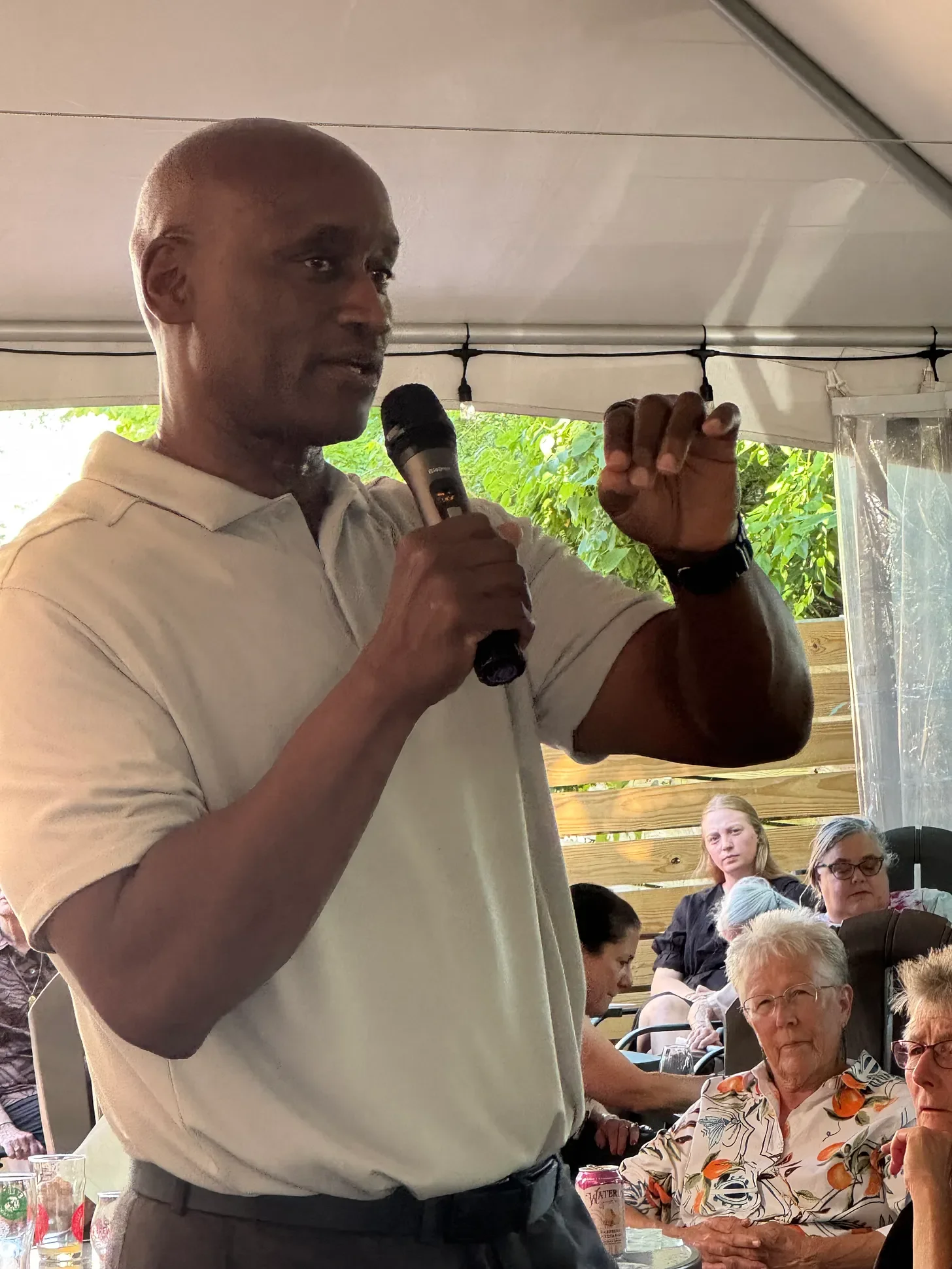
Dr. Charles Robinson talks to the community of League members about American History.
Before we provide a recap of his talk, let’s take a moment to review three things and one person that Robinson referenced briefly during his remarks that bear slowing down and revisiting in case we have forgotten or never learned about them.
Land-Grant University
Land of Opportunity
Electoral College
W.E.B. Du Bois
What is a Land-Grant University?
In 1862, Congress created the Morrill Act, which gave 30,000 acres of land to each state, which was then sold to state universities. According to the Association of Public and Land-Grant Universities website:
“The original mission of these institutions, as set forth in the first Morrill Act, was to teach agriculture, military tactics, and the mechanic arts as well as classical studies so members of the working classes could obtain a liberal, practical education.”
The Hatch Act of 1887 further required that universities be responsible for agricultural research. And the Smith-Lever Act of 1914 gave us the Cooperative Extensions that I now reference so regularly. Kristin Netterstrom-Higgins from the UA Cooperative Extension has been a speaker for the Drinks & Dialogue series with the League of Women Voters, and I reference our UA Extension information on policy regularly.
Land-grant universities receive federal support for postsecondary education in the interest of an educated electorate and public access to education and research.
What is the Land of Opportunity?
From the 1940s to the 1980s, Arkansas was known as “The Land of Opportunity.” But in 1995, state legislators adopted “the Natural State” as the state’s nickname. More recently, another legislator proposed a change back to “The Land of Opportunity,” but that did not pass.
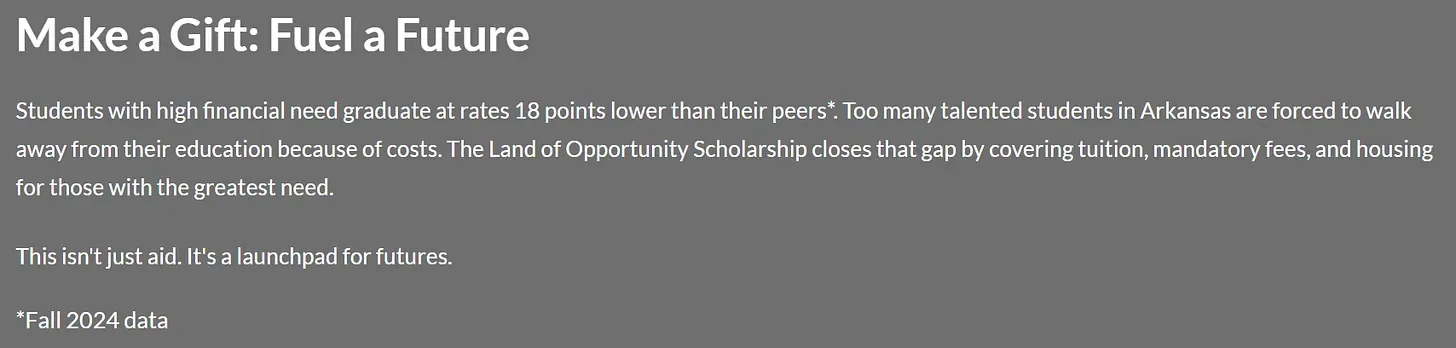
As for the origin of the Land of Opportunity Scholarship at the UA? Students with greater financial need graduate at rates 18 points lower than students who don’t need financial assistance. University leadership aimed to help those students by launching a $200 million fundraising initiative in 2024 to support the UA’s new Land of Opportunity Scholarship campaign. The three-year effort will create an endowment to bridge the gap in funding for academically successful Arkansans who exhibit a high level of financial need, including Pell-eligible students. Scholarship recipients will also receive support that includes mentorship, academic coaching, financial planning and career readiness programs — all of which lead to higher retention and graduation outcomes. You can read about the Land of Opportunity Scholarship and donate at the website link or QR Code below:


What is the Origin of the Electoral College?
The League of Women Voters has long been in favor of abolishing the Electoral College in favor of One Person, One Vote. The League points out that five times throughout our history, the will of the people has been overridden by the Electoral College. The League hopes:
“for a more democratic electoral system, one that aligns with the core principles of equality and voter empowerment.”
And Finally, Who is W.E.B. Du Bois and Why Should You Read Him?
Du Bois was the first Black American to earn a Ph.D. from Harvard University. He started the National Association for the Advancement of Colored People’s first publication, The Crisis, in 1910.
Du Bois is referenced frequently in literary and civil rights circles. There are two books to consider adding to your reading list. The first: The Souls of Black Folk, written in 1903, speaks of the “double consciousness” of being Black in America. And the second recommendation is Black Reconstruction, which points out that history books of reconstruction had left out the viewpoint of the American slaves and, as such, were incomplete. W.E.B. Du Bois’s work is considered canonical Western literature.
Dr. Charles Robinson began his talk with a passing reference to W.E.B. Du Bois. Du Bois wrote about the duality of pride, being both proud of being Black and proud of being American. Robinson didn’t say more about Du Bois, but he used that reference as an intro to his discussion about the United States having a problem of matching our self-interest to our self-image.
Robinson further went into the concepts of self-interest versus self-image. He said, “Thomas Jefferson wrote about life, liberty, and the pursuit of happiness. At the same time, there were tens of thousands of slaves in America. Jefferson wrote those things at a time when America was defining itself. But those ideals were not accessible to the slaves in the country. Jefferson himself owned slaves.”
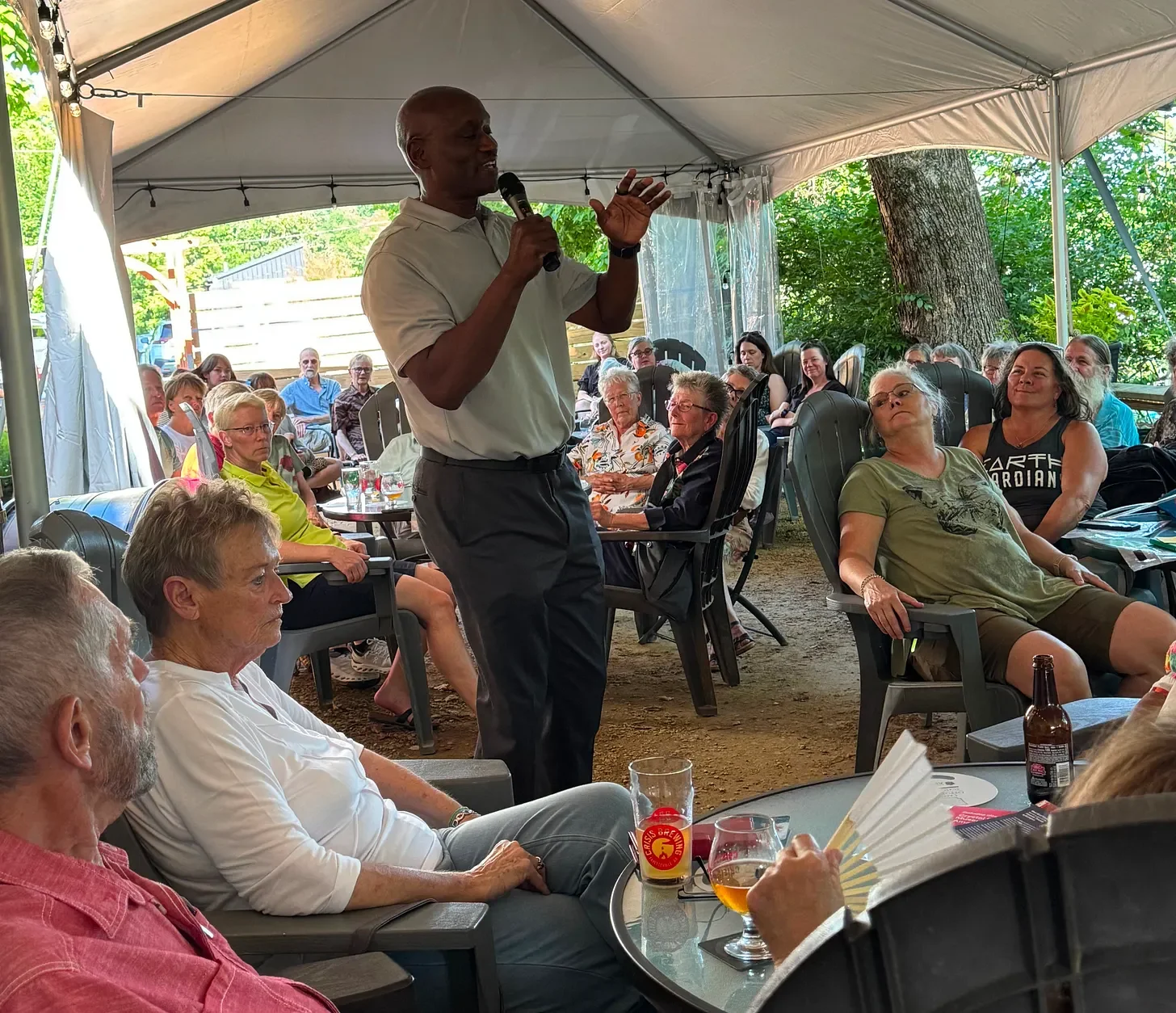
Jefferson had 200 slaves, yet he wrote: “all men are created equal.” He didn’t get rid of his slaves because they were too economically important to him. His self-interest did not match his self-image.
Robinson recounted that Jefferson wrote about “We the people,” and that he had a strong impulse for democracy. But, he pointed out, there was very little democracy. The Electoral College was established through the Constitution and has been here since the beginning. It was not designed to promote democracy. The most democratic part of this new government was in the House of Representatives and, interestingly, contained the elected positions with the shortest terms.
Robinson said that for capitalism to better deliver the American dream, Americans need to do a better job of marrying image and interest. Historically, people with more money have had more influence in politics.
When speaking of economics and capitalism, Robinson shifted focus to the University of Arkansas’s Land of Opportunity Scholarship fund. He discussed the reality of economically challenged Arkansas students attempting to graduate and how many more obstacles they face.
Robinson spoke about the University of Arkansas being a land-grant university. He spoke about the success of the land-grant universities, the involvement of people in the state, and how it could work more for the people.
“Are we blind between the image and the interest?” Robinson says there is “no value to watering down American history. The truth liberates us to affect positive change. It makes you more socially conscious. To do things like run for office
When asked by an attendee how Dr. Robinson uses history in his day-to-day work, he said his study of history has made him a better listener because, in his job, he has to listen to and serve all Arkansans.
How do we get voters as excited about voting as they are about college football?
It’s important to highlight something else that Dr. Robinson touched on related to Arkansas being a state with low voter turnout rates. He said that “Arkansas doesn’t have any problem getting people to come out to football games.” He indicated that we need to make voting exciting, give people that same kind of energy around voting, like the energy around sports. This is an idea that can help organizations like the League when strategizing about voter empowerment and engagement. How do we make voting fun and exciting? How do we excite our citizens about the voting process? How do we celebrate voting and make it exciting?
That is the challenge at hand if we hope to reconcile the interests of the American people with the image that we like to project.
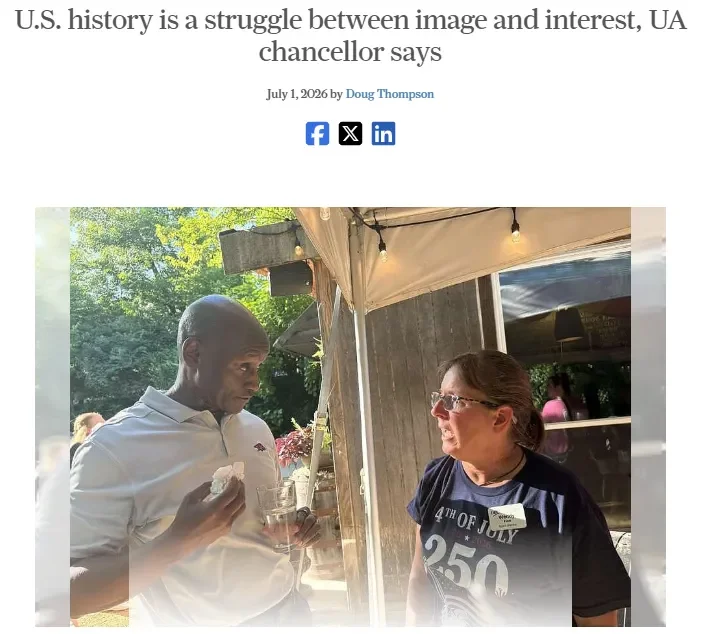
NWA Democrat-Gazette Article